 Hanyu
Hanyu

Ask anyone what’s hard about Chinese and they’ll say tones. Four little pitch patterns that can turn “mother” (妈 mā) into “horse” (马 mǎ). It sounds terrifying. And yes, tones matter — get them wrong and you will confuse people.
But here’s what nobody tells you early enough: tones are not the hardest part of Mandarin. Not even close.
What tones actually are
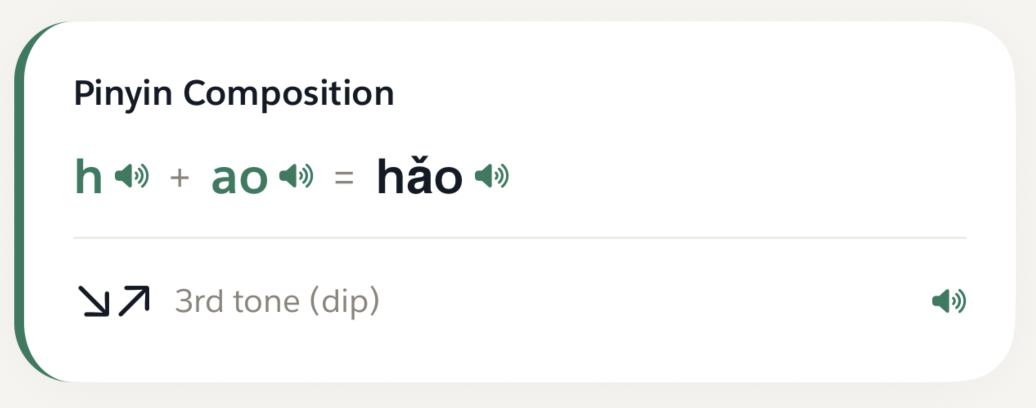
Every Mandarin syllable is spoken with one of four tones (plus a neutral one). First tone is high and flat. Second tone rises. Third tone dips and rises. Fourth tone falls sharply. That’s the entire system.
Compare that to English, where we use pitch to express sarcasm, questions, emphasis, surprise, and a dozen other things — all without anyone teaching us rules. You already manipulate pitch constantly. You just don’t think about it.
The difference with Chinese is that pitch carries meaning at the word level. It’s not optional seasoning — it’s part of the recipe. But the mechanics? Your mouth and vocal cords already know how to do this.
Why they feel harder than they are
Three reasons tones seem scarier than they should:
1. They’re front-loaded. Tones are the first thing you encounter, before you have any vocabulary or context to anchor them. Learning tones in isolation is like learning musical intervals without hearing a song — technically correct, emotionally meaningless.
2. Textbooks over-isolate them. Drilling mā-má-mǎ-mà in a row is useful for exactly one week. After that, what matters is hearing tones in real words and real sentences, where context does half the work for you.
3. Perfection anxiety. You’ll mispronounce tones. Native speakers will still understand you most of the time because context fills in the gaps. Tones matter, but they’re rarely the thing that causes total communication breakdown.
So what IS the hardest part?
Compound words and context. Chinese has roughly 400 distinct syllables. Multiply by four tones and you get about 1,600 possible sound-tone combinations — carrying tens of thousands of words. That means any single syllable can represent dozens of different characters.
The word 事 (shì) means “matter” or “thing.” But 是 (shì) means “to be.” And 市 (shì) means “city.” Same sound, same tone, completely different meanings.
How do Chinese speakers keep them straight? The same way you distinguish “right” (correct) from “right” (direction) from “write” in English — context and word pairing. Chinese takes this to another level with compound words: 城市 (chéngshì, “city”), 事情 (shìqing, “matter”), 但是 (dànshì, “but”).
Learning which characters pair with which — and why — is where the real long game of Chinese lives. It’s not about memorizing a tone chart. It’s about building a web of associations that makes individual characters meaningful in context.
The practical takeaway
Don’t skip tones. Master them early. But don’t let them become the monster under the bed that stops you from moving forward.
Here’s a better approach:
- Learn tones with real words, not in isolation. Drill 你好 (nǐ hǎo) as a unit, not ǐ and ǎo separately.
- Listen more than you study. Your ear will calibrate faster through exposure than through charts.
- Accept imperfection. Your tones will improve over months of practice, not from a single study session.
- Focus energy on vocabulary. The compound word puzzle is what deserves your long-term attention.
Tones are the toll booth, not the highway. Pay the toll, then drive.
Getting tones right in practice
The trick with tones isn’t knowing the rules — it’s hearing them in context and reproducing them naturally. That’s hard to do with a textbook. You need to hear words spoken correctly, then practice saying them back, over and over, until the pitch pattern becomes automatic.
That’s one of the things we built Hanyu around. Every word comes with native pronunciation you can replay, and the review system keeps bringing words back so your tones get reinforced through repetition — not just memorization. It’s the difference between knowing what third tone sounds like and actually producing it without thinking.
See how this works in practice — from characters to conversation.
Download free